
Introduction
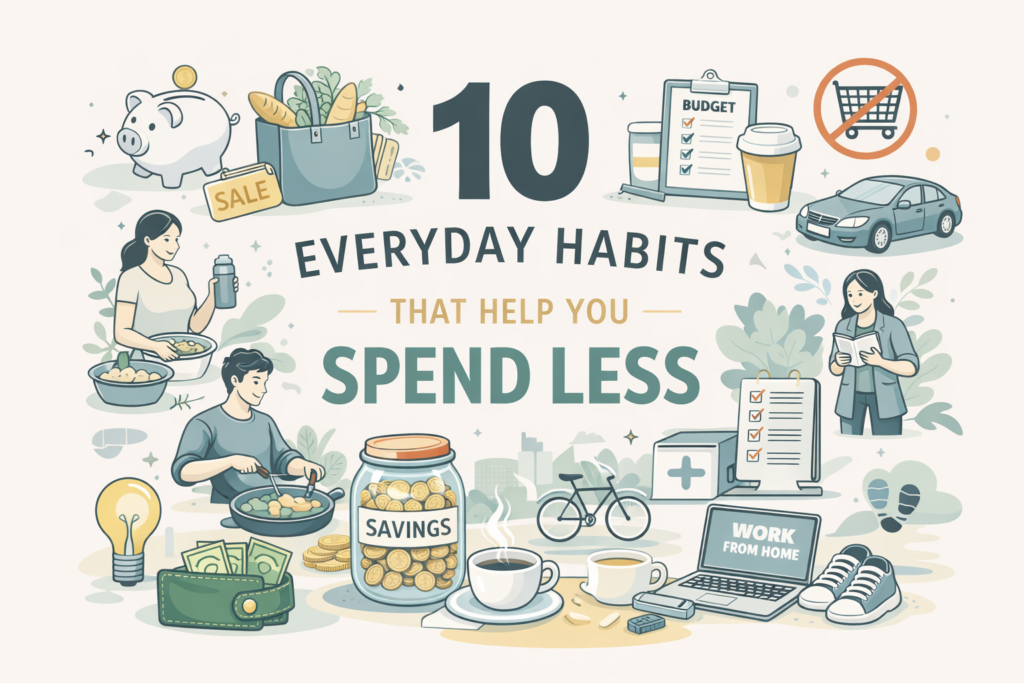
Ever wonder where your paycheck disappears by the end of the month? You’re not alone. Most people don’t realize how small, daily choices add up to big expenses. The good news? With a few simple tweaks to your everyday habits, you can start spending less without sacrificing happiness or comfort.
Let’s look at 10 practical habits that help you save more while still enjoying life.
Track Your Expenses Daily
You can’t fix what you don’t measure. Tracking your expenses gives you a clear picture of where your money is going.
Why Tracking Helps
When you see that $5 coffee every morning, it’s easier to make conscious choices. Awareness is the first step to financial control.
Easy Tools
Use apps like Mint, YNAB (You Need A Budget), or even a simple spreadsheet to record expenses daily.
Create a Realistic Budget
A budget isn’t a restriction—it’s a roadmap to freedom.
– 50% for needs (bills, food, rent)
– 30% for wants (dining out, entertainment)
– 20% for savings or debt repayment
Adjust the percentages as needed. What matters is consistency.
Cook More, Eat Out Less
Restaurant meals add up fast. Cooking at home can cut your food budget in half.
Meal Prep Made Easy
Set aside one day weekly to plan your meals. Try batch-cooking grains, roasting veggies, and prepping proteins—it saves both time and money.
Use Cash Instead of Cards
Paying with cash feels more real. When you physically hand over money, you think twice before spending.
Tip:
Withdraw your weekly spending allowance in cash. Once it’s gone, it’s gone—no overspending temptation!
Cancel Unused Subscriptions
Those $10, $15, or $20 monthly charges add up quickly.
Action Step:
Go through your bank statements and cancel services you rarely use—like old streaming subscriptions or forgotten apps.
Tools like Trim or Rocket Money can help identify and cancel them automatically.
Plan Purchases in Advance
Impulse buying is a budget killer.
Shopping Smart
Before buying non-essential items, wait 24 hours. Often, you’ll lose interest and save money.
Make shopping lists—and stick to them!
Buy Generic Brands
Store brands often have the same ingredients as name brands, just at a lower cost.
Try Switching On:
– Cleaning products
– Cereal and snacks
– Over-the-counter medications
You’ll barely notice a difference—except in your bank account.
Set Savings Goals
Saving without a purpose can feel pointless. That’s why goal-based saving works best.
How to Do It
– Short-term: Vacation, emergency fund
– Long-term: Retirement, home ownership
Automate transfers so saving happens without thinking.
Avoid “Retail Therapy”
Shopping can feel like stress relief—but it’s short-lived.
Healthier Alternatives
Go for a walk, listen to music, or journal instead. These habits satisfy emotional needs without draining your wallet.
Use Discounts and Cashback Apps
Why pay full price when deals are everywhere?
Top Cashback Apps
– Rakuten
– Honey
– Ibotta
Just remember: only buy what you actually need.
Before tossing something broken, try fixing it.
Quick Wins
– Sew torn clothes
– Replace phone screens instead of buying new
– Learn basic home repair skills on YouTube
Small repairs can save hundreds each year.
Limit Credit Card Usage
Credit cards make overspending easy—and interest makes it worse.
Better Practices
– Pay off balances monthly
– Use cards only for planned expenses
– Track due dates to avoid late fees
Financial freedom starts with avoiding debt traps.
– Practice Minimalism
– Less stuff means fewer temptations.
– Decluttering Mindset
When you focus on what truly adds value to your life, you naturally spend less.
Minimalism isn’t about deprivation—it’s about choosing intention over impulse.
Conclusion
Saving money doesn’t mean living a boring or restricted life. It’s about making smart, intentional decisions every day.
When you track expenses, plan purchases, and simplify habits, your wallet—and your peace of mind—will thank you.
Start small, stay consistent, and watch your savings grow effortlessly.
FAQs
1. What’s the easiest habit to start saving money?
Tracking your expenses—it’s simple, eye-opening, and effective.
2. How much should I save each month?
Aim for at least 20% of your income if possible, but even 5–10% is a great start.
3. Are budgeting apps safe?
Yes, reputable apps like YNAB and Mint use bank-level encryption to protect your data.
4. How can I avoid impulse buying online?
Remove saved cards, unsubscribe from sale emails, and use a 24-hour rule before checkout.
5. Is it okay to treat myself occasionally?
Absolutely! Budgeting isn’t about punishment—it’s about balance and smart spending.